sobota, 22 czerwca 2024

KORTATU IN WARSAW PART 2: SKINHEADS ON THE RAMPAGE


KORTATU IN WARSAW PART 2: SKINHEADS ON THE RAMPAGE

Either way, when it came to attending gigs, by 1987 there was a far greater deterrent for many of Poland’s punks than potential run-ins with the police: the now burgeoning skinhead movement. From 1986 up until the early 90s, skins made their presence felt at virtually every punk gig in Warsaw, where they specialised in mugging people for their boots and army surplus gear. Sometimes they invaded punk, alternative or metal festivals, starting mass brawls with the crowd to assert their dominance. Still a fairly new subculture in Poland, skins were out to make a name for themselves. They wanted to be the baddest of the bad – not unlike the punks a few years earlier when battering, for instance, the hippie audience of prog rockers Ogród Wyobraźni at the Jarocin festival in 1983. Now it was the punks’ turn to run.

“At the beginning of Róbrege ’87, the skinheads were hanging outside the Intersalto Circus tearing off people’s badges, robbing their boots, and so on…”, Kuba remembers. “Later they came inside to watch the bands and started fighting in the pit. But I hardly remember that.” Although the quality of the footage is very poor, there are a few frames in the Róbrege ’87 documentary on YouTube capturing what we presume are skinheads with cropped hair and braces outside the Intersalto Circus:

There’s also footage of a brief disturbance in the crowd and of a skinhead manhandled by bouncers to audience chants of “down with fascism”:

According to the Brown Book 1987-2009 published by the Never Again Association (an ‘official’ anti-fascist organisation that cooperates with the Foreign Office and the Polish Football Association), this is what occurred at Róbrege ‘87:

„Between 21 and 23 August, dozens of skinheads armed with sticks, metal pipes and knives terrorised the audience and participants of the 5th Róbrege music festival … Among other incidents, there were dozens of beatings and a big fight between skinheads and the audience, involving the use of knives and other dangerous tools. The incidents were chauvinist in nature – the attackers regarded the alternative youths attending the festival as ‘filth’ and ‘inferior’ Poles.”

Leaving aside the political motives, which the authors deduce from the incidents as if they were self-evident, I wondered if this was an accurate account of the events at Róbrege. “Well, there were scuffles all the time”, Piotr of QQRYQ remembers – but then he adds some context: “At the time, there was terrible thuggery and violent crime in Poland’s streets, and Warsaw was a dangerous city. When the skins became more numerous, it was almost a natural development that they’d get caught up in this vibe too. All the more so since some of them were into robbery – they’d mug people for boots, for example”. He doesn’t remember any big punch-up or attack, however, “only lots of minor skirmishes”. What’s more, he believes the Brown Book “goes a bit overboard when citing knives” – he remembers “only one incident when someone inside the festival started waving a knife about, and the bouncers quickly overpowered him”.

Punks inside the Intersalto

Trojan, the aforementioned ex-skinhead from Upper Silesia concurs: “The Brown Book entry is a gross exaggeration – an attempt to present events that were trivial at the time as an apocalyptic battle between good and evil. I don’t remember any big brawl, least of all one involving weapons”. Like Piotr, he recalls “plenty of minor scuffles, usually involving tearing off badges and patches of ‘enemy’ bands.” He adds that “skinheads didn’t operate as one big organised group, but were a number of groups from different cities. Often they didn’t know or distrusted each other. Fights between skinheads were frequent too – let me just remind you of football antagonisms…”

What about the ideological motivation that the Brown Book authors see behind the skinhead violence? “At the time, there wasn’t any ideology behind it”, Trojan continues. “What kind of ideology are they referring to anyway? Polish chauvinism against Poles? White racism against whites?” According to Trojan, the “politicisation of the Polish skinhead scene started later”. What you had in 1987, he says, were “subcultural antagonisms and a bit of common crime, such as stealing people’s jackets or boots”.

Viva la Contra

On Saturday 22 August, after a set by the Russian alternative act Va-Bank, who Dolores remembers being booed by some elements in the audience on account of their country of origin, Kortatu finally hit the stage. Eyewitness recollections of their set are blurry: “I don’t remember their performance all that well”, Kuba regrets, “Just that they played and that it was wild and exotic for us, because we hadn’t seen many bands from the west.” Piotr of QQRYQ zine has a somewhat clearer recollection: “Kortatu were great. They were very energetic on stage, and the music itself was highly original and captivating”.

Alas, for some reason Kortatu weren’t one of the 18 bands filmed for the Róbrege 1987 documentary, although a YouTube channel called Radioactive Rat has published a one-track sample from what seems to be 38-minutes audio recording in decent quality – alas, the whole thing isn’t available for sale. Hear Kortatu perform ‘La linea del frente’ at Róbrege here:

As for scuffles erupting during Kortatu’s set, Piotr – unlike Fermin of Kortatu (see interview) – doesn’t remember any: „Every now and then, fights broke out outside the Intersalto and on the festival grounds too, but from memory, no such thing occurred when Kortatu were playing. Maybe people shouted a few things, but most were just dancing and having fun.”

And shout a few things they did. In the 1987 mail interview with QQRYQ, Kortatu bassist Iñigo commented ironically: “I enjoyed playing that concert a lot, especially since it’s unusual for us to hear punters shout things such as ‘Redskins fuck off’ or ‘Viva la Contra’” [Contras = US-backed rightwing terrorist groups in 1980s Nicaragua]. Apparently, heckles along these lines were provoked by the fact that Iñigo wore a t-shirt of Redskins, the UK band, on stage. “Personally, I didn’t hear anything of the sort, says Piotr, but the ex-skin Trojan recalls that “an anti-communist skinhead named Szczygieł shouted ‘Viva la Contra’ when Kortatu played their ‘Nicaragua Sandinista’ song”.

“Be cautious in the street” – first issue of Fajna Gazeta skinzine

Even so, Kortatu made an impression on the skins in the crowd. Trojan confirms that his crew “had great fun during Kortatu’s set, especially since most of the other bands played music that wasn’t very digestible for us: some kind of new wave reggae…” Kortatu remain a band loved by Trojan to this day.

The following year, the aforementioned skinzine Fajna Gazeta reprinted Piotr’s Kortatu interview from QQRQ zine. ‘Robson’ (Robert), then a budding skinhead from Wrocław and later the manager of Poland’s best-known nazi band, Konkwista 88, remembers: “I got a copy of Fajna Gazeta at Róbrege ’88 – a strange zine. They reviewed everything from Redskins to rightwing bands – a real mish-mash. And they had an interview with Kortatu, a leftwing skin band… I thought it was funny that they’d reprint stuff from punk zines”. Robson would learn to appreciate the likes of Kortatu more when switching sides and becoming a redskin himself in the mid-90s…


Conspiracy theories

Let’s turn to another aspect relating to the supposed skinhead attack against the festival: in Polish antifa circles, rumours have been circulating for years that the skinheads were set up by state security services to destroy Poland’s “cultural opposition”, i.e. the alternative scene. Such conspiracy theories appear to be partly based on a later incident in Sosnowiec, where in 1988 a member of a skinhead mob attacking a street demonstration by Fighting Solidarność (a split from the anti-communist Solidarność trade union) turned out to be a former member of the ZOMO paramilitary police. The Brown Book says: “As a result of this, speculations emerged that the skinhead subculture was at that time partly inspired and controlled by the Communist special services, which tried to use it to fight against the youth political opposition and contesting subcultures”. And in an interview with the hipster magazine Vice, antifa activist Rupert claims that “outside Róbrege we were fighting with nazis on one side and cops on the other … big mobs would show up and the police didn’t intervene.” He darkly implies that “many nazi-skins had members of the police or military in their families”.

“Destroy fascism – stop skinhead impunity” – a leaflet by the Radical Anti-Fascist Action group

One thing to keep in mind is that the police had informers in all subcultures that it considered a potential threat to public order – not just in the Eastern bloc, but in countries such as West Germany too. Another is that Polish antifa consists largely of anarchists (often of a decidedly liberal bent) who are quick to put an equal sign between the socialist regime and fascism – after all, both were “authoritarian”. By way of confirmation bias, then, isolated incidents of informers or provocateurs among skinheads become a secret understanding, a unity of interests, or even a conspiracy between “nazi skins” and the Polish equivalent of the KGB…

Our ex-skinhead mate Trojan, likewise, casts doubt on such theories: “The Security Service (SB) had people in all circles, and in subcultural circles it was very easy to extort cooperation through blackmail. It’s difficult to speak of skinheads as a whole, though. Yes, there was a scuffle in Katowice or Sosnowiec between skinheads and members of Fighting Solidarność, and allegedly it was instigated by an SB officer… On another occasion, skinheads raided the premises of the Polish Socialist Party/Revolutionary Democracy in Warsaw [an oppositional socialist party formed in early 1988 – MC], and once again there were rumours that this was instigated by the SB. But none of these rumours were ever confirmed.”

What’s more, confirming something that we mentioned earlier, Trojan questions the political significance that the alternative scene attributes to itself in hindsight: “The so-called alternative scene – and I don’t mean punk rock, but new wave and so on – was organised by official institutions. In fact, the Solidarność underground at the time accused the alternative scene of redirecting the rebellious sentiments of the young into safe channels”.

For some people, events always present themselves in black and white: in this case, as an epic battle between the forces of light on one side (anarchists, anti-communist dissidents and the alternative scene) pitched against all the forces of darkness on the other (Communists, ‘nazi skins’ and cops). I’m afraid reality is more complex. Neither the ruling party apparatus, which was rife with contending factions, nor the opposition – which ranged from far-left to far-right and compirsed all shades in between – was homogenous. The same applies to Poland’s early skinhead scene. The relationship between Poland’s “cultural opposition” and “actually existing socialism” might be worth an investigation in its own right. I’ll just leave it at saying that the retrospective self-stylisation of some figures from the punk and alternative scenes as freedom fighters should be viewed critically.


View original post


KORTATU IN WARSAW PART 1: REDS AT RÓBREGE


KORTATU IN WARSAW PART 1: REDS AT RÓBREGE

The Róbrege festival took place every autumn from 1983-90. It was originally founded by the late Robert Brylewski (a legend of the Polish underground scene associated with Warsaw punk and reggae acts such as Kryzys, Armia, Izrael and Brygada Kryzys), Sławomir Rogowski and Paweł Rozwadowski and organised by the Hybrydy student nightclub located in Złota street, not far from the Palace of Culture and Science. The location of the actual festival was the tent of the Intersalto Circus in nearby Towarowa Street right in the heart of Warsaw.

As the website of the Palace of Culture and Science informs us, “the event has its origins in the period of martial law, when young musicians were active against censorship … From the very beginning, the idea of the festival was to search for young rebels in the music scene who did not expect commercial success and whose music had a positive and authentic message.”

Of course, official statements have to be handled with some caution. Martial law was lifted and censorship relaxed in July 1983, whereas the first Róbrege festival took place in October 1983. In fact, 1983 was the year that the government embarked on a cultural charm offensive, showing greater tolerance towards the native alternative scene and inviting western acts to play in the People’s Republic – indeed, alternative acts were in greater demand because big western rock bands were asking too much money. It has been argued, not implausibly, that this was to create a safe outlet for the rebellious energies of the Polish youth, which might otherwise be steered in a political direction. London’s UK Subs, for instance, were able to absolve an 11-date tour of Poland alongside local new wavers Republika as early as in March 1983. Although martial law hadn’t even been lifted yet, Charlie Harper & Co played to their biggest ever audiences: 10,000 people in Lodz, 24,000 in Warsaw.

How did Kortatu’s invitation to the festival came about? A contact from Warsaw, Iwo Swierzewski, tells us about a kind of cultural exchange between Poland and the Basque Country. One day, Marino Goñi – or possibly someone else from the Basque Soñua label – showed up in Warsaw with albums by Kortatu, La Polla Records, Barricada, Baldin Bada and other such Basque Radical Rock artists under his arm. He was introduced to the director of the state-owned Tonpress label, Marek Proniewicz, and Marek Wiernik, a well-known TV and radio presenter. One result of the meeting was the reissue of the Polish alternative band Klaus Mittfoch’s debut album on Soñua – another was Kortatu’s invite to play at the Róbrege festival in Warsaw in August 1987.

Skinheads

By that time, a rather different ‘alternative scene’ had also emerged in Poland. An article in the youth magazine Razem bore the headline: “Bald heads, beer, the clattering noise of marching steel-toe boots, the crackling sound of breaking bones: here we come – skinheads”, and the main text continued along similar lines. While some readers recoiled in horror, certain sections of the punk scene were fascinated. Piotr Wierzbicki, then the editor of Warsaw’s influential QQRYQ punk zine (1985-93), remembers: “When skinheads first started appearing in Warsaw around 1985, all of them were ex-punks. Skinhead especially appealed to punks with strong hooligan attitudes. They only had the faintest knowledge of skinhead culture: they knew what a skinhead looks like and that they had to be violent to the max. Some took to this like fish to the water because they were basically thugs.”

Although there are unconfirmed rumours that an early crew existed in Szczecin as early as 1981, it wasn’t until 1985-6 that skinheads started appearing en masse. And while one shouldn’t read too much into the anti-social nazi posturing that became fashionable among some early Polish skins, there was at least a certain right-wing tendency, not least thanks to the ‘information’ contained in the aforementioned Razem article: “The Polish youth press wrote about skinheads in a scandalising tone, saying that skinheads were fascists by definition”, Piotr tells me. “For many skinheads in Poland this was the only information they had, so some of them became nazis. Others, though, simply stayed at the level of ordinary thugs.”

Based on his early impressions, Piotr even penned an anti-Oi article for the fifth issue of QQRYQ in 1986. “It was a ridiculous piece”, he says, “a testament to how little we knew behind the Iron Curtain. Because the skinheads proliferating by 1986 were shouting ‘Oi! Oi!’ while also identifying as nazis, I condemned Oi per se in my article: I wrote that it had nothing to do with punk since it was fascist”. Very soon, though, Piotr got hold of information to the contrary from Jarek, a recent skinhead convert from Sosnowiec and co-editor of Poland’s first skinzine, the ultra-violent Fajna Gazeta. Jarek was also a member of an early Polish skin crew that made a point of being ‘anti-political’ rather than nazi. “They were horrible thugs, though”, Piotr recalls, “even if they were mostly fighting metalheads rather than punks”.

And so, with some assistance from Jarek of Fajna Gazeta, the embarrassed Piotr wrote another QQRYQ article entitled ‘Oi!’, in which he tried to set things right. QQRYQ readers now learned that bands like 4 Skins, Blitz or Criminal Class had nothing to do with the likes of Skrewdriver, that some Oi bands had appeared at anti-racist festivals, and that the Oi movement was already more or less history in Britain – even if it was only just starting out in Poland.

Kortatu on TV and radio

Warsaw Central station

By spring 1987, Piotr had become acquainted with the exotic ska punk sounds of Kortatu from Irun, Basque Country, who had two albums under their belt: “In the run-up to Róbrege, Marek Wiernik played their records on his Cały ten rock radio show, which meant that a lot of people got to hear them because all punks were listening to that programme. It was one of the few sources of new underground music.” Thanks to Iwo Świerzewski of the Radioactive Rat YouTube channel, we can present a snippet from Marek Wiernik’s radio show playing Kortatu in 1987 – find it at the bottom of part 3.

Were people aware that Kortatu were linked to skinhead culture? “Hardly anyone knew what kind of band it was”, Piotr continues, “Ska wasn’t very popular yet, so the music sounded strange. Our only information was that Kortatu were a Basque band, which we also found strange.” But Trojan, a skinhead from Upper Silesia who attended the festival, not least to see Kortatu, tells me: “Kortatu were popular with Oi skins in Poland – although mainly for their music. Their political background was secondary and, in any case, obscure to most of us”.

In August that year, Kortatu arrived by train at Warsaw Central station, a stunning design completed in time for Leonid Breshnev’s visit in 1975. There, they were picked up by Dolores Palomero Ortega, who would be their interpreter and tour guide for the whole duration of their Warsaw visit, which lasted about 2-3 days. Although Dolores would later work for the Spanish embassy in Warsaw and still does today, she says there was no embassy involvement in Kortatu’s visit: a friend had privately asked her to help out since they weren’t many Spanish speakers living in Poland back then.

Kortatu were driven to a television studio, where they pre-recorded a short interview for a music programme called 102 broadcast every day at 7.20pm just before the evening news. Since only two TV channels existed in Poland at the time, a large audience would follow the daily 10-minutes music show as a matter of course. The interview can be seen in two parts below: in the first, Kortatu briefly introduce themselves, which is followed by some light-hearted chatter with Dolores interpreting. Make sure to switch on the English subtitles we’ve made for you:

In the second part, they give a clenched-fist salute and sing the ‘Eusko Gudariak’, the republican anthem of the army of the Basque Autonomous Government in the Spanish Civil War: “We are the Basque Soldiers, we are ready to give our blood to free the Basque country”.

Some latter-day commenters have suggested that the ‘incident’ provoked a similar response to Bill Grundy’s interview with the Sex Pistols on British television 11 years prior. But Dolores remembers no such problems: “The TV interview was a joke”, she tells us, “The two TV hosts were very well-prepared and knew all the important singers and bands in the world – after all, they had been presenting the pop charts on state radio for 40 years. Nobody saw the group’s behaviour as disrespectful. I think they found it rather fun and spontaneous”.

And indeed, the two presenters (the one with the ‘tache is the aforementioned Marek Wiernik) look amused in the interview that was broadcast the same evening, even if they were wary that the Spanish embassy might file a formal complaint for Kortatu’s performance of ‘Eusko Gudariak’. “I told them that the embassy wouldn’t say anything because it was none of their business”, Dolores explains, “and besides, ‘Eusko Gudariak’ had been sung in the Basque Country on many occasions without any police intervention”. After the recording, Kortatu were keen to watch the broadcast on TV, so Dolores invited them over to her house. Since her husband had prepared Spanish omelette, they happily accepted.

It’s true that Dolores didn’t translate everything the band said during the recording – most notably, when vocalist Fermin revealed that he sometimes farts on stage. Would that have been an unforgivable cultural faux-pas? Maybe not – but Dolores skipped some of Fermin’s comments that she felt weren’t appropriate for a prime-time programme on national TV. What’s more, it was “quite difficult to translate the nonsense they were saying, firstly because it was my first time as a translator and also my first time on a television program.”

Nothing to do with stifling state censorship, then? “Bands from all over the world came to Poland, from the Rolling Stones to Soviet groups”, says Dolores, “and while censors interfered with the lyrics of Polish songs, they didn’t interfere with bands that came to visit.” She adds: “Keep in mind that Poland, in some cases even to this day, is a generally very culturally conservative country, and I imagine that today some of this behaviour might be censored.”

Kortatu spent the night in student accommodation in Górnośląska street just west of the Vistula River. They gave another interview on a radio station, and it has been said that they caused another scandal by provoking the ‘apparatchik’ interviewing them. But this notion might have more to do with preconceptions about the Polish People’s Republic than with reality: according to Fermin, the radio station was in fact run by would-be dissidents, and Fermin provoked them with pro-Cuba slogans. Read our interview with Fermin for more details.

Kortatu liked Warsaw a lot, Dolores tells us. But did they get a real idea of ​​what life was like in the socialist country? “The truth is that someone from western Europe visiting Poland at that time didn’t see much difference”, she offers, “there were other products in the stores – but foreigners, in general, liked them very much and had a great time.” Sadly, she had no photos taken with the band – but she still has her pass for the Róbrege festival (pictured above).

Reds at Róbrege

Punk couple in Warsaw’s historical centre, 1987. Photo: Jan Morek

The first day of Róbrege was usually dedicated largely to punk, the second largely to reggae, the third to new wave, post-punk and experimental music. Kortatu were booked for 22 August – the reggae day. And so Piotr of the aforementioned QQRYQ zine was one of many punks heading to Warsaw’s town centre to watch Kortatu alongside homegrown reggae acts like Izrael, but also a bit of hardcore punk from Warsaw’s own Dezerter. He had a chat with the Kortatu lads, which he remembers as short and awkward: “They didn’t speak much English, or maybe their accents were just too weird for me to understand. And I wasn’t exactly a language genius either… In any case, I took their address, and we agreed that I’d interview them for issue 10 of QQRYQ by mail”.

What did the punks make of the fact that a ‘red’ band like Kortatu was scheduled to appear at what was widely perceived as a countercultural event, though? Piotr of QQRYQ thinks that „hardly anyone knew that Kortatu were reds. Marek Wiernik only played music on the radio, and he didn’t particularly bother to explain the ideology behind it”. People were left in no doubt about Kortatu’s views, though, when they cheerfully explained their stance in the next issue of QQRYQ: “We like the band Redskins very much, both musically and lyrically, and we’re on the left ourselves”. When asked what he thought of Poland, Kortatu’s Iñigo Muguruza offered: “In my opinion it’s a country that has always suffered a lot, and because of this people have moved closer to things that I’m not keen on. For example, Catholicism and pro-Americanism”.

Piotr was less than impressed: “I did understand that they had their own problems, different from ours”, he remembers, “but we thought it was total madness. And this didn’t apply only to them, but to large sections of the western scene in general. We lived in a country where having a passport was a privilege. There was censorship and intrusive propaganda. The Security Service and special militia units (ZOMO) were on the rampage, human rights violations were rife, and on top of all this the economy was in tatters. Behind all this was the Communist party (PZPR) with its exclusive monopoly on power. Meanwhile, from what we heard from the West, it seemed that a lot of people were fascinated by Communism, which we thought was total idiocy.”

Kuba Panow circa 1985/86
View original post


sobota, 27 kwietnia 2024

Punk Bands: Red Lights aka The Rats


 Red Lights aka The Rats


"
RATS/RED LIGHTS and some PITIFUL behaviour . . . "

More PITIFUL history ……..

I find myself once more in a Public drinking house, interviewing another could have been, should have been rock star . . Well, actually I’ve been here before as joining me on this August, Sunday Afternoon is none other than my old mate, MARK TATE one time leader of THE PITIFUL.

During the PUNK ROCK Phenomena of late 1976 –77, THE PITIFUL were real contenders for being the most controversial band in the Eltham area of S.E. LONDON.


[Brian] "Hello again Mark, thanks very much for talking to me again about your exploits as a rock star.’’

[Mark] "Hi Brian, nice to see you again. Thanks for asking, but I don’t know about the rock star bit." [Mark chuckles loudly]

[Brian] "So MARK, we know a little bit about THE ROXY years, along with the trials and tribulations of being in a PUNK ROCK band of that time. What’s the full story, leading up to you joining THE PITIFUL ?? You must have been knocking around with musicians a bit before then?’’

[Mark] "Ashley Cadell I think was the first musician I would call a mate. I knew other people that were in bands, but Ashley was the first person who I saw as a proper musician, who I bonded with. Ashley formed THE RATS, who later became THE RED LIGHTS. I unwittingly attended the same school [Crownwoods Comprehensive], as Ashley. I didn’t get to meet him though, until I had actually left Crownwoods.


[Brian ] "How did Ashley Cadell and yourself get to eventually cross paths?"

[Mark] "Well, I eventually left Crownwoods Comprehensive in the summer of 1976, along with a good mate of mine, Andy McLachlan. Andy McLachlan arranged to meet a mate one afternoon, and asked me to come along as he thought that I had a lot in common with this mate of his. This mate, as it happened turned out to be Ashley Cadell. Andy and Ashley had recently formed a punk band, that they had named THE RATS. Ashley Cadell was still in the upper sixth form of Crownwoods at this time, and we had arranged the meet up at the sixth form Common room at Crownwoods. With Ashley was this mate of his, Jason Bratby. Jason Bratby, was the son of the famous artist, John Bratby.

When we got to the Common Room, Ashley and Jason were sitting around, listening to this old 50’s Dansette record player . They were listening to "Anarchy In The UK." I remember being instantly taken by their style. Tight crop haircuts, and they were both wearing boiler suits. A style of their own, very punk rock but a little bit different. And as it happened, they turned out to be really top blokes, just really friendly and approachable."

[Brian] "Mark, How does your obsession with 50’s style, especially that of Rockabilly compare to punk rock, something that was so naïve and new sounding for the time. Nothing remotely like the Rockabilly sound?

[Mark] "I’ve always loved music in particularly the pure 1950’s Rockabilly sound. The style of Rockabilly along with the music is rebellious. Rockabilly I suppose was the Punk Rock of its time. Punk was as diverse as Rockabilly. It shook up the 70’s and rebelled against all that shit music that was in the charts at the time. Like in the 50’s with Rockabilly, it was the music and culture that totally rejected everything that your parents were into . Music and style was totally turned on its head."

[Brian] "Well certainly no one can deny that . . . How seriously did the bands take, what they were doing. Was there any aspiration to be famous and successful or was it really just kids having a laugh at the expense of adults and conformity?"

[Mark] "I suppose it was just a big laugh in the beginning, to be in a band . . girls loved it and it was certainly something to show off about a bit, to say you were in a band , But saying that, I’m sure that a great deal of kids, inspired by the fact that punk bands were actually getting record deals. To think you could actually be in a band that might get to release a record was a huge buzz. Yes I suppose something to aspire to. In the early days, even THE RATS really aspired to be a successful band. They really spent all the time they could, rehearsing tirelessly."

Ashley & Andy

Andy

[Brian] "Did they have a regular place to rehearse?"

[Mark] "Yes, they used to rehearse in the basement of Andy McLachlan's mums house just off of Glenesk Road in Eltham. I was invited to sit in and watch them rehearse a few times. I’ve got very fond memories of that. They were really good and different to anything else around.’’ [Mark smiles]

[Brian] "Who else was in THE RATS in the beginning? They were a three piece at first, weren’t they?

[Mark] "No !! The band were a four piece outfit right from the beginning. They comprised of Andy McLachlan, who was on vocals. Dave McMullen played the drums, with Andy Howell on Bass guitar and additional vocal. Ashley Cadell was on the lead [Guitar] and vocals. He was quite the accomplished guitarist, and could bash out some mean riffs. He had this lovely White Fender Strat, which instantly influenced me to buy my first guitar. It had to be a Strat’. Mine was black though. Very proud of that guitar I was."

[Brian] "Who were the bands that influenced THE RATS?"

[Mark] "I dunno about the individual bands but they were definitely defining a sound of their own. Although THE RATS, initially started off as being a Punk Band, I always thought they were far too tight an outfit to be just any ordinary Punk Rock band. I thought they definitely had an R&B influence coming out, from somewhere."

[Brian] "We know you formed THE PITIFUL later on but didn’t hanging around THE RATS give you any influence to start a band of your own, this early on?"

[Mark] "I didn’t form THE PITIFUL, I just grabbed the opportunity when it arose, as I covered in the last chat we had. That was the first band I was in and to be honest I hadn’t really thought anything about starting a band or joining one. These things just happened and I took the situation by the horns when it came up. I did get asked to join THE RATS once, and declined. I did sort of regret not doing it, but things turned out great with THE PITIFUL opportunity that any real regret was soon dispelled."

[Brian] Wow! you were asked to join THE RATS. How did that come about?"

[Mark] "Well ….. I had gone along to watch THE RATS rehearse. Just the same as I had always done before. There was a bit of an atmosphere about, but nothing tense or anything. Just this feeling that something was up. For one reason or another Andy [Mclachlan] had left the room and Ashley just came straight out with "How do you fancy replacing Andy as our new Vocalist? Well to say I was taken aback was an understatement. It was quite the musical coup, I tell you. I did though decline. It would have been a great opportunity and I was well honoured to be asked to join THE RATS, but yes as mad as it sounds now, I did decline, mates and all that. I had really bonded with these guys . They had become really good friends."

[Brian] "Did you declining, change anything in the relationship you had with the band and who did they get as a replacement?

[Mark] "Do you know, I think things carried on exactly the same. Andy remained on Vocals and nothing else about it was ever mentioned in my company. As far as my relationship with the band, we were still very good friends. Every Sunday, Ashley would drive over to my house in New Eltham, with Jason [Bratby] and Andy [McLachlan] and all of us would go over to Croydon. We would go to the Croydon Greyhound and check out what bands were playing. The Croydon Greyhound was a great venue. The Adverts, Siouxsie And The Banshees, The Buzzcocks, and even Motorhead all played there. We had some terrific times there. The first band that we all went to see there were The Ramones. Can you believe that, The Ramones at the Croydon Greyhound ?? Supporting them were another American band, Talking Heads who were in fact on their first ever tour of the U.K. What a memorable night that was. The Ramones grabbed me hook line and sinker that night. To this day they are still one of my absolute favourite bands. " [Mark exudes excitement at this point as if the experience was just yesterday]

[Brian] "How long was it before you became a part of the legend that is, THE PITIFUL?"

[Mark] "I was still hanging around with THE RATS for a long while, right up to the point of meeting up with THE PITIFUL guys. It must have been a fair few months after the declining of the vocalist position. The Pitiful opportunity turned up just as much out of the blue as The Rats invitation. I was on a number 21 bus, one evening and I just got talking to this bloke on the bus. He noticed my look of cropped hair, leather jacket and winkle pickers, and started chatting realising our appreciation of similar music tastes. This bloke turned out to be Jim Jarret. He along with a couple of other mates had just formed The Pitiful. Jim played bass guitar and instantly told me of the predicament that they had with their lead singer [Tony Cunningham] bailing out on them, on their first gig. A gig at The Roxy too! Jim straight away, there and then invited me to join The Pitiful. Initially I did decline but further meetings did eventually win me over." [Mark takes a slug of wine before continuing]

[Brian] When did you finally accept then Mark?

"It all happened about a week later, when I was on my way home, from a few pints with my mates. Id been out for the evening at the GREYHOUND pub in Eltham high street, when out of no where, I was confronted by a couple of lads, who took a dislike to my look. One of them had a blade, and for an instant I really thought I’d had it. It just so happened, that Jim Jarrett and a mate of his, Peter Holt were walking down the opposite side of the road and saw all that was going on. They both immediately ran across the road to my aid. Jim gently persuaded the Twat with the knife, to put the blade away. The situation may have been sorted, but Jim and Peter gave the two of them a right royal kicking anyway. Jim and Peter took me for a pint or two, as I was still a bit shaken up by the whole episode. From that day Jim, Peter and myself became good mates, sharing a pint or three fairly regularly. Over the coming weeks I finally got to meet the other members of The Pitiful. It wasn’t long before being reminded of their predicament, of them being without a singer. Guess what ?? I was asked again if I would consider being the singer for The Pitiful. I was also told the fact that a further gig had been booked at The Roxy, which was going to be in a fortnights time and they really needed a singer pretty sharpish. No pressure then?? I did finally agree, and begun an intense series of rehearsals, pretty much the next day. It didn’t really help much, all that rehearsing. We were still Shit!" [Mark laughs and nearly falls off of his chair]

[Brian] "What did Ashley Cadell and The Rats, think of you accepting, The Pitiful post after declining their invitations?"

[Mark] "It never got spoken about. Over time, due to rehearsals and spending more and more time with The Pitiful, I had less and less contact with Ashley and Andy of The Rats. In fact pretty soon, I had lost all contact with The Rats. That was a real pity as they were really cool guys."

[Brian] "Were you still aware of how The Rats were doing by any means?’’

[Mark] "Oh yes. They were doing really well and their movements were well known about. They changed their name to The Red Lights. It transpired that they had to change their name from The Rats, because of that other band with Rats in their name. The very lame, Boomtown Rats."

[Brian] "Didn’t The Red Lights get a record deal soon after changing their name?"

[Mark] "Yes, that’s right. They got a deal with Freerange Records and released a single. " Never Wanna Leave " catalogue number SLIK 1.[ Mark sniggers ] a little bit of saddo’ info for those that care . . . "

[Brian] "Do you have any regrets at all, for not accepting The Rats offers?"

[Mark] "Who knows what might have been. Just maybe I should have stuck with The Rats, but hey ho. Seriously though, my time with The Pitiful was fantastic. The memories are sensational, but also knowing The Red Lights, when they were just the embryonic, The Rats was amazing too. I wouldn’t trade those memories and experiences for all the wine in France."

[Brian] "Did you ever hear from any of The Red Lights again or hear about what happened to them?"

[Mark] "Alas, I never did get to speak to any of them again. A real real pity. As far as knowing anything about what happened to them all, I did hear that eventually, Andy McLachlan was replaced. He moved to Malibu I believe. Ashley Cadell, he became a really successful session musician, in New York. He played with the likes of Talking Heads main man David Byrne. Dave McMullen, is I’m afraid, sadly no longer with us, and I’ve no idea at all what happened to Dave Howell. Jason Bratby, well he ended up following in his fathers footsteps to be a successful artist. He had his own exhibition at the National Portrait Gallery."

[Brian] "Mark, Thank you so very much for taking time out, to talk to me again about your exploits with The Rats and The Pitiful. Is there anything else that can be added to this great history?"

[Mark] "There are a few little bits and pieces that I’d like to relive at some point, but due to one reason or another I am going to hold back for a bit. I’d really love to know if anyone remembers seeing The Pitiful or even knew any of us [ Mark Tate, Jim Jarrett, Steve "HOPPO" Hopkins, Tony Cunningham, or Steve Mason ] If anyone wants to contact me Id be delighted. They can call me on 07757 643921. Please do get in contact."

"Oh yes . . . Before I forget, a CD is being planned. I have absolutely no idea of what interest there will be in it but a plan is in action to release The Deptford Sessions, by The Pitiful. It will even have a bonus track or two no less, hee hee."


[Brian] " Mark , thank you once again for talking to me.’’

[Mark] " The pleasures all mine sir . . . The Pitiful story, will continue I can assure you. Until next time, Arse!! "

THIS INTERVIEW WAS HELD AT 2.00 ON THE 9TH OF AUGUST, 2009 ON A GLORIOUSLY SUNNY, SUNDAY AFTERNOON, IN THE CHEQUERS PUB IN CROCKENHILL. A VILLAGE NOT FAR FROM SWANLEY, ON THE BORDERS OF KENT.

Interviewer Brian Dennis

Rats/Red Lights Postscript

Unlike the Pitiful, who famously were deemed too bad for The Farewell To The Roxy album, the Red Lights did appear with a faster version of 'Never Want To Leave' than their single. They also appeared on Kevin St John's (Roxy Club owner, gay gangster) Farewell To The Roxy Tour of around 3 dates in Scotland.

By this time both McLachlan and McMullen, on vocals and drums, respectively had been replaced.
 

Steve Townsend - Drummer
Ashley Cadell - Guitar
Ian Russell - Vocals
Andrew Howell - Bass

The band split in mid 1978.


niedziela, 7 kwietnia 2024

poniedziałek, 25 marca 2024

DoDonPachi (Xbox 360, in Instant Brain) Xenia Canary Emulator [game and unlock save, download]


                                       Save folder [435A07E0] move to Xenia Canary folder [content] 

Instant Brain (Xbox 360):

Download:

Unlock save DoDonPachi in Instant Brain:

Download:

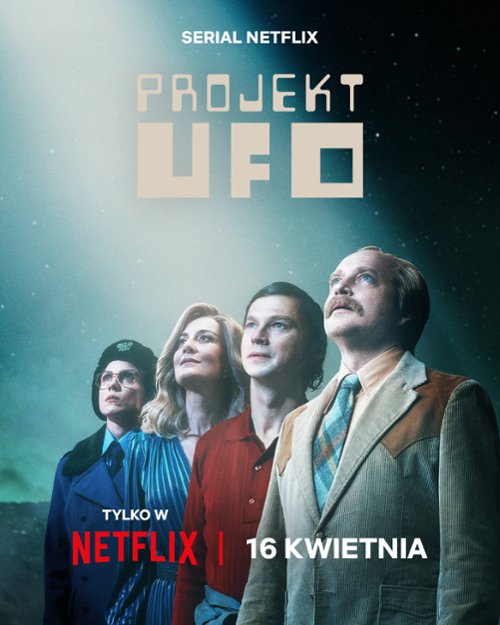
Download "Projekt UFO" (2025) miniserial PL

  Projekt UFO (2025) miniserial PL                      Próżny prezenter telewizyjny i ufolog z małego miasteczka próbują odkryć pochodzenie...